Towards the Artificial Hive Mind
This short piece draws key insights from A Brief History of Intelligence: Why the Evolution of the Brain Holds the Key to the Future of AI and my own thoughts. The author describes five major breakthroughs that drove the evolution of human intelligence. One of the most interesting to me was the development of communication skills.
At some point in our evolutionary history, the ability to share individually gathered, complex experiences became one of the greatest differences between us and our ape cousins. We moved beyond simply learning by observing and imitating. Instead, we developed proto-language, most likely to coordinate group hunting, and eventually built sophisticated communication systems that allowed us to exchange detailed knowledge across time and space.
By turning personal experiences into shareable knowledge through language, humans created what is known as the human hive mind. In this collective intelligence, each individual brain could specialize in just a few areas. One person might focus on designing bone tools, another on building wooden furniture, or someone on preserving knowledge through writing. Because every "node" in the network became an expert in its domain, the group as a whole can generate more knowledge than any single person could. The entire hive mind benefited from these specialized contributions.
As the human network grew in size, exploration and discovery accelerated, creating a self-reinforcing knowledge flywheel.
But what actually happens inside the human brain to generate new knowledge? Here in my opinion are the three key processes that drive the creation of new knowledge:
- Continuous learning from the world: Humans constantly observe and interact with their environment, building mental models of how reality works.
- Learning from the hive mind and deliberate practice: We absorb knowledge from others and refine our skills through repeated practice.
- Creative problem-solving through new explanations: Solving problems by forming fresh explanations. These explanations arise from our personal understanding of the world and from the experiences we have accumulated, ultimately leading to the creation of entirely new knowledge.
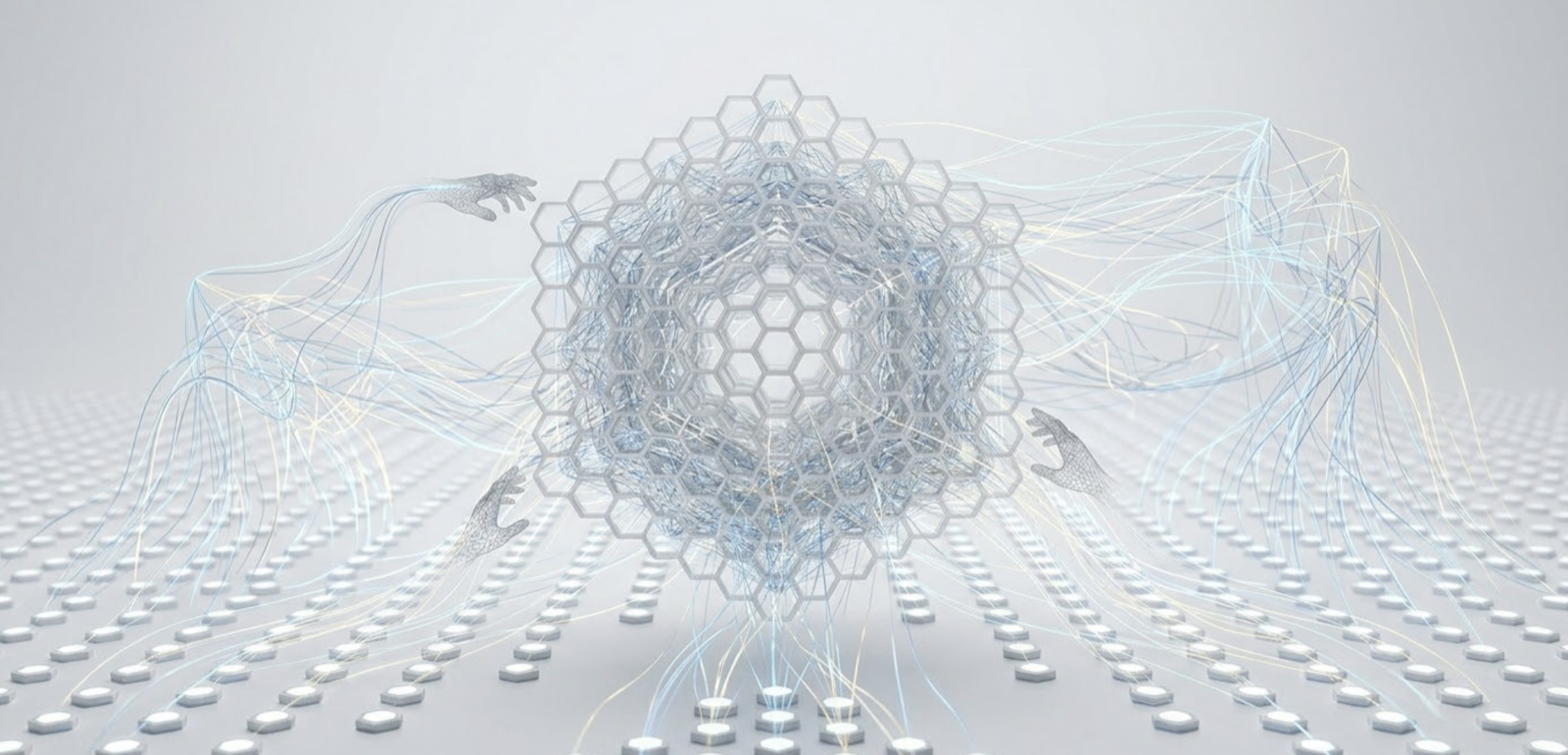
This human hive mind, built on language, storage mechanisms, specialization, and collective learning, laid the foundation for everything that followed. The next leap, now underway, is the transition from this biological hive mind to an artificial hive mind.